
Think about placement before it arrives
A solid stone planter is heavy, and it is hard to move once it is filled with soil. Decide its final position first, and check that the floor, terrace or roof can carry the load. On a rooftop or balcony, ask your builder about weight limits.
Drainage comes first
Roots sitting in water are the main reason plants fail. Make sure the planter has a drainage hole, and keep it clear. For a piece without a hole, use a plant in a liner pot and lift the liner out to water. We can include drainage holes in the size and position you ask for.
Cleaning stone planters
Brush off soil and dust with a soft brush and rinse with water. For marks, use warm water, a little mild soap and a soft cloth. Avoid acidic cleaners such as vinegar or lemon on marble, since they can dull the surface, and avoid harsh scrubbing pads.

Moss, algae and stains outdoors
A little moss gives a stone planter character, and many people like it. If you prefer a clean look, scrub the surface gently with a soft brush and mild soap. Rinse well afterwards. Sealing the stone when it is new makes stains easier to wipe away.
Cold climates and winter
Water that freezes inside porous stone can cause damage. If you live where winters are freezing, tell us when you order and we will advise on the right stone. Dense stones such as granite generally cope better with cold than softer, more porous stones. Empty and cover planters if your winter is very harsh, and make sure water cannot collect inside.
Indoors
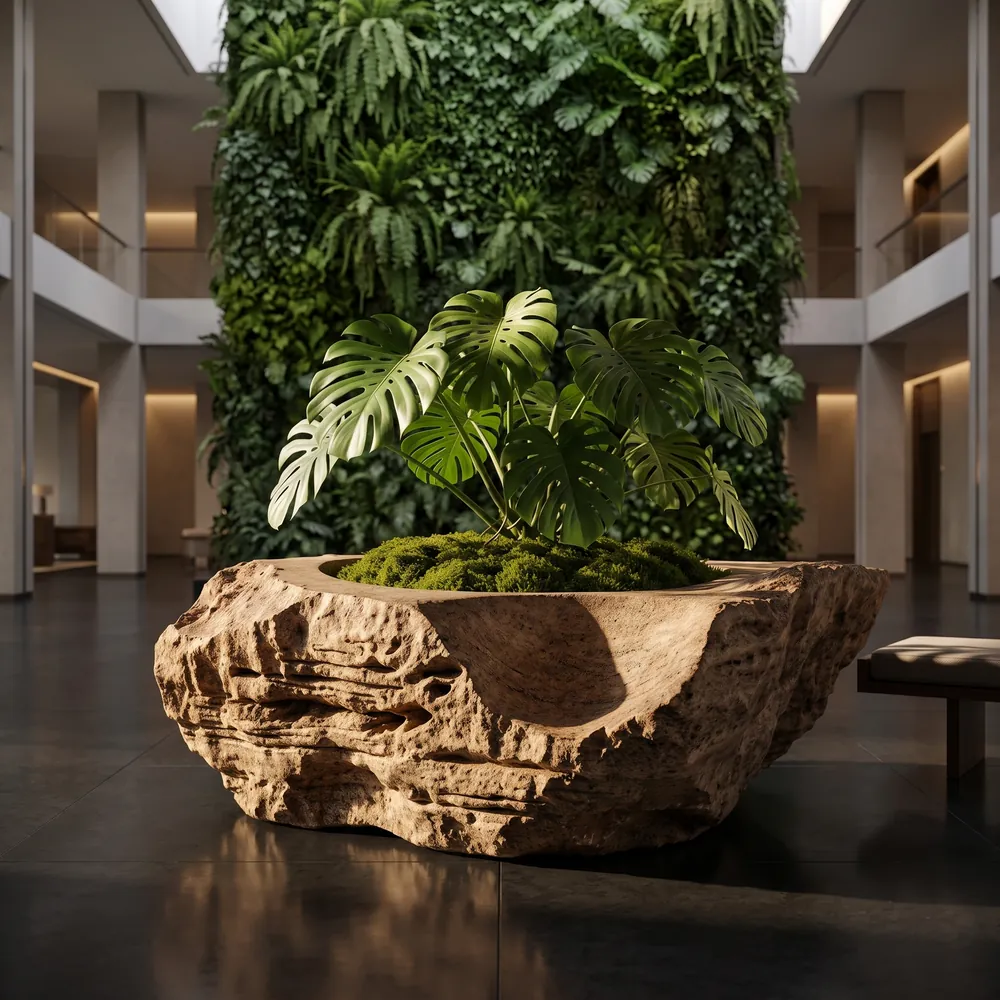
Stone planters bring weight and calm to a hall or a lobby. Use a liner or a saucer so water does not mark the floor, and wipe the outside with a damp cloth when you water. Keep it out of strong sun if your plant is sensitive.
Made to your size
Our planters are carved to order in Udaipur, from small tabletop bowls to large boulder pieces. See the range on our planters page, or request a quote.